Voicebot vs chatbot: when to use which and why most businesses get it wrong
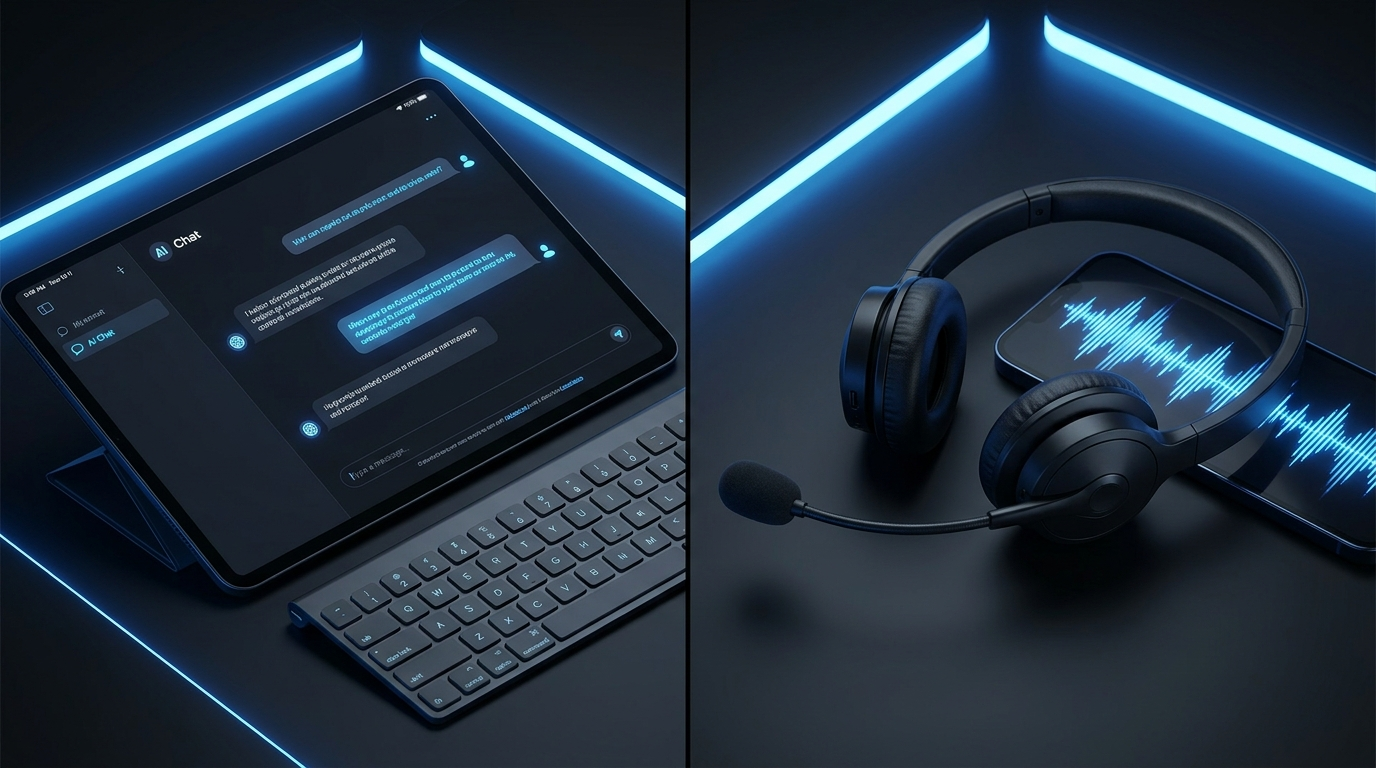
A sealing manufacturer's call centre contacted us wanting a chatbot. After the first call we deployed a voicebot instead. Not because it was trendier or more expensive, but because their customers are technicians on the shop floor who have greasy hands and hold the phone to their ear. They would never have used a chatbot.
Why the choice matters more than the technology
Both a chatbot and a voicebot run on similar AI technology today. Both connect to your data, both hold natural conversations, both can hand off to a human when needed. The difference is not intelligence but communication format and who your customers actually are.
Companies that get this wrong usually make one of two mistakes. They either deploy a chatbot because it is cheaper and simpler, even though their customers prefer to call. Or they deploy a voicebot because it sounds more impressive, even though 90% of their contacts arrive through a web form.
When a chatbot makes sense
Customers come through the website or an app
A chatbot is the natural choice wherever the customer is sitting at a computer or typing on their phone. E-commerce, SaaS products, companies with email-heavy traffic or a web contact form. The customer has time to read a response, can copy it, share it or come back to it later.
Queries are repetitive and text-based
If your customers typically write things like "when will my parcel arrive" or "how do I return an item," a chatbot handles this faster and cheaper than a voicebot. Text is also easier to analyse, log and improve over time.
When a voicebot makes sense
Customers prefer the phone or cannot type
Industrial customers, older users, drivers, field technicians. Anyone for whom typing a query is inconvenient or physically impractical. For these groups a voicebot is the only AI solution they will actually use.
Inbound calls as the primary channel
If your company receives dozens or hundreds of calls per week and a large share of them are the same recurring questions, a voicebot saves operators hours every day. One of our clients in a distribution centre reduced the volume of calls being transferred to a live operator by 60% in the first month.
Automated outbound calling
A voicebot can not only receive calls but also make them. Appointment reminders, order confirmations, stock availability alerts. A chatbot cannot do this.
What if you do not know what your customers prefer?
The answer is straightforward: look at where most contacts are arriving from today. Phone or text? If you do not know, add both options to your website for one month and watch what customers choose for themselves. The data will decide for you.
The third option that people ask about less is deploying both. A chatbot on the website captures text queries, a voicebot on the phone captures calls. Both share the same knowledge base, both pass contacts to sales reps. For mid-sized companies with a diverse customer base, this is the most common outcome of our audits.
Not sure which would suit your business better? Let's talk it through in a free audit. We will show you how your customers prefer to communicate and which solution will deliver results the fastest.
Recommended articles
From August 2026 your AI voicebot must admit it is a robot. What it means for small businesses
Since 2 August 2026 the AI Act transparency rules apply. Both chatbots and phone voicebots must tell the customer they are not human. Here is what it means in practice and what to fix in one afternoon.
Read article
ChatGPT for business: a practical guide 2026
Most businesses tried ChatGPT and were disappointed. The problem is not the tool. It is how they use it. Here is how to do it right.
Read article
AI agents in business: what they will handle for teams in 2026
An AI agent is not just a chatbot. It can work with tools, data and tasks. For companies, that means a new layer of automation.
Read article