From August 2026 your AI voicebot must admit it is a robot. What it means for small businesses
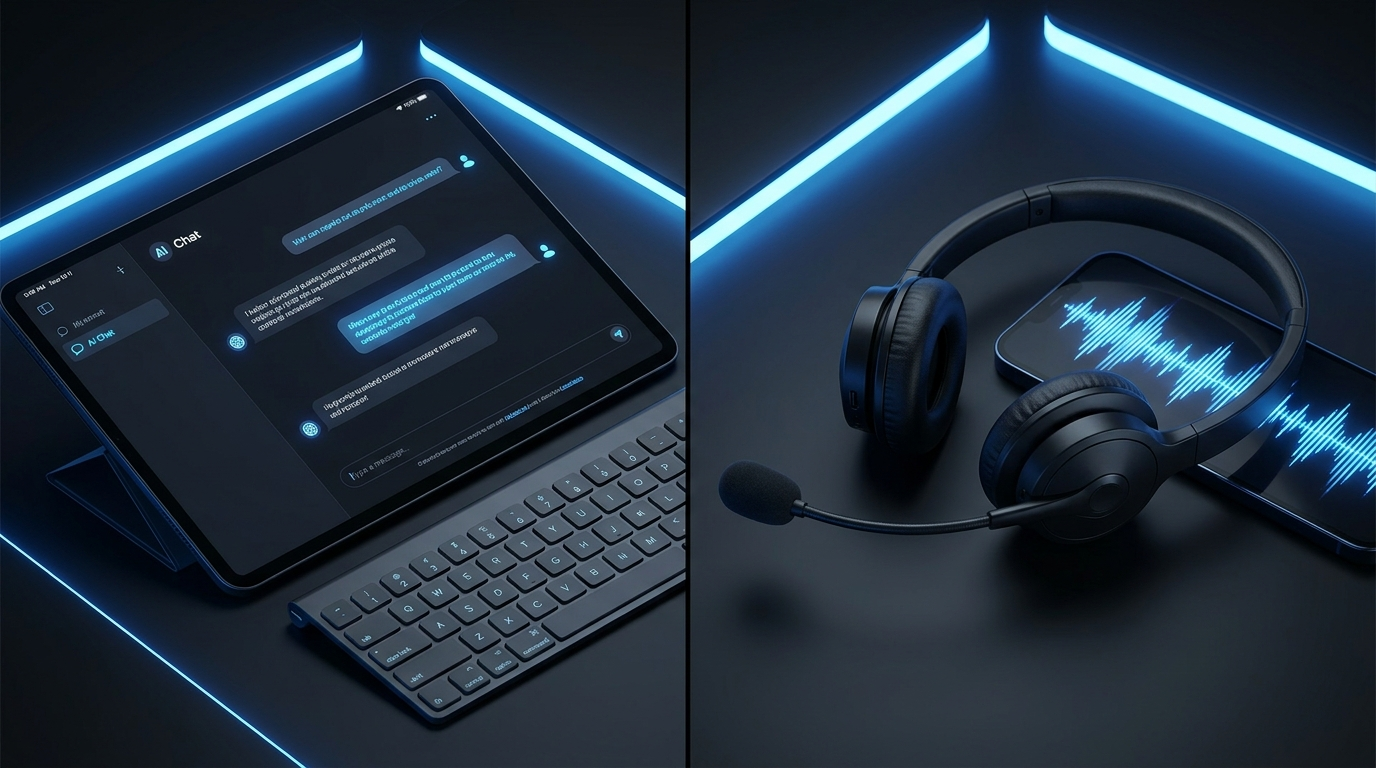
Since 2 August 2026 the AI Act transparency rules apply across the European Union. In short: if artificial intelligence speaks on behalf of your company, the customer has to know. It covers the chatbot on your website as well as an AI receptionist on your phone line. The good news is that for most small businesses this is an afternoon of work. The bad news is that many of them have no idea the rules exist.
What exactly applies now
This is Article 50 of the AI Act. The regulation entered into force in August 2024 and its obligations switch on in stages. The transparency package switched on 2 August 2026.
- AI that talks to people must disclose itself. If someone chats with a bot or speaks to a voicebot, it must be clear there is no human on the other side.
- Synthetic content must be labelled. Generated text, images, video and audio, including a cloned voice on your phone line.
- The information must come in time. Not in the website footer and not at the end of the call, but at first contact.
It applies to you even if you do not build AI
The AI Act distinguishes providers, who build the system, from deployers, who put it in front of their own customers. If you run a chatbot on your site or connect an AI receptionist to your company number, you are a deployer and part of the duties are yours. In practice you handle it with one clause in the supplier contract and one check of what the bot actually says.
Fines and supervision
Breaching the transparency duties can cost up to 15 million euros or 3 percent of worldwide annual turnover, whichever is higher. Those numbers are aimed at global corporations, and penalties are set with regard to company size and severity. In Czechia the market surveillance role involves, among others, the Czech Telecommunication Office.
The more practical risk is reputation. One customer who spends two minutes describing a problem to a robot without knowing it will cost you more than any regulator.
A checklist you can finish this afternoon
1. Check the first sentence
Call your own number and message your own chatbot. If the opening line does not say it is AI, that is a text change, nothing more. A working version: Hello, this is the automated assistant of Novak Service. I am an AI, but I can book you an appointment. How can I help? Avoid vague labels such as virtual colleague. The customer cannot tell from those that they are talking to a machine.
2. Do not confuse it with call recording
The GDPR recording notice is not the AI notice. Two different duties from two different rules. If you record and AI speaks, both have to be said.
3. Add a paragraph to your website
State that you use an AI assistant on the line and in chat, what it does, how long transcripts are kept and how to reach a human. Ten minutes of work and you have something to point to.
4. Keep a path to a human
When a customer asks for a person, it has to be possible. Either a transfer or a callback with a specific time. A bot with no way out is worse service than voicemail.
5. Ask your supplier two questions
Where the data lives and whether it trains models, and whether they will confirm in writing that the system meets AI Act requirements. A decent supplier answers within a day.
Cloned voices: watch out
Cloning a voice from a few minutes of audio is easy today, and a familiar voice makes the line feel personal. But two duties stack up here: synthetic audio must be labelled and the AI must disclose itself. You also need provable consent from the person whose voice you clone. If it is your own, simple. If it is an employee who may leave next year, put it in writing before you deploy it.
Will disclosure scare callers away?
This is the first question clients ask. From our deployments the answer is calm: no. People recognise AI on a line anyway, usually within a sentence or two. The only difference is whether you told them or they found out and got annoyed. What actually drives callers away is a bot that goes silent, a bot that talks over them and a bot that can only recite opening hours.
If you are still only considering a voicebot
None of this is a reason to postpone. Building now means you bake the rules into the brief instead of retrofitting them later: a disclosing opening line, a clear rule for handing over to a human and a defined retention period for recordings. Three extra lines in the brief, no extra cost.
FAQ
Does the bot have to say the words artificial intelligence?
No exact wording is prescribed. The information has to be clear and understandable. AI or automated assistant works. Virtual colleague does not.
Does it apply to a button-based bot with no AI?
A fixed decision tree is not an AI system under the regulation. Saying it is an automated guide is still sensible.
Is the supplier responsible, or are we?
Both, each for their own part. Get the compliance confirmation in writing.
What does compliance cost?
For an existing line, usually nothing. It is a text change and a paragraph on the website. Cost only appears where a human handover has to be built.
Not sure whether your line or chatbot meets the new rules? Get in touch and we will go through the opening line, the path to a human and how recordings are handled. See what we build.
Recommended articles
ChatGPT for business: a practical guide 2026
Most businesses tried ChatGPT and were disappointed. The problem is not the tool. It is how they use it. Here is how to do it right.
Read article
AI agents in business: what they will handle for teams in 2026
An AI agent is not just a chatbot. It can work with tools, data and tasks. For companies, that means a new layer of automation.
Read article
AI in business: where to start without wasting money on the wrong tool
The best first step is not buying a licence. The best first step is choosing a process where value can be tested quickly.
Read article